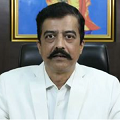
Arvind Poswal
Dr A S Clinic Pvt Ltd, India
Abstract Title:
Senolytics and in-situ exosome generation: A regenerative paradigm shift in hair restoration
Biography:
Dr. Capt. Arvind Poswal is a hair restoration surgeon and regenerative medicine specialist from New
Delhi, India, with over 25 years of clinical experience. He is President of the Society of Hair Transplant Surgeons and President of the International Regenerative Medicine Association. Dr. Poswal pioneered advanced FUE techniques, including the world’s first beard-to-scalp transplant, and has authored
multiple books on gene biohacking, epigenetics, and regenerative therapies for hair loss. His current
work focuses on senolytics, biological age optimization, and endogenous regenerative signaling in hair restoration.
Research Interests:
Hair loss is increasingly recognized as a manifestation of accelerated biological aging rather than a
purely genetic or hormonal disorder. Cellular senescence, stem-cell exhaustion, chronic low-grade
inflammation, and impaired intercellular communication play a central role in progressive follicular
miniaturization and poor regenerative response. This presentation explores the emerging role of
senolytics, with particular emphasis on Fisetin, as a regenerative strategy in hair restoration.
Senescent cells accumulate within the scalp microenvironment due to oxidative stress, inflammation,
metabolic dysfunction, and repeated surgical or environmental insults. These cells secrete pro
inflammatory and anti-regenerative factors collectively termed the senescence-associated secretory
phenotype (SASP), which disrupts hair follicle stem-cell signaling and tissue repair. Senolytics selectively
reduce senescent cell burden, thereby restoring a more youthful and responsive biological environment.
A novel concept discussed in this presentation is in-situ exosome generation through topical senolytic
based epigenetic optimization rather than reliance on externally sourced exosomes. Emerging evidence
suggests that improving intracellular NAD⁺ metabolism, mitochondrial efficiency, and inflammatory
balance can stimulate endogenous exosome release from resident stem and progenitor cells. This
approach offers advantages in safety, biological compatibility, and regulatory simplicity.
The session further examines the role of topical Fisetin—used alone or combined with microneedling—
as a dual-action agent: functioning both as a senolytic and as a trigger for local regenerative signaling
and exosome-mediated cellular communication. Clinical integration in hair restoration protocols,
including peri-operative optimization and non-surgical hair regeneration strategies, is discussed.
This paradigm emphasizes respecting biology rather than overriding it, shifting hair restoration toward epigenetic rejuvenation, improved stem-cell responsiveness, and sustainable long-term outcomes.